Monday, July 22, 2013

Emergency Flip-Flop Fix


This plastic bread tie can save your broken flip-flop
It's happened to everyone. You're out enjoying the summer with friends and family at the beach or park. Suddenly, with an awkward stumble, your cheap flip-flops break and you are left shoeless or spend the day repeatedly reassembling them and hoping they don't come apart (again.)

I recently learned a very clever trick for a quick and sturdy repair.

Find a plastic bread tie, the square, flat type with a hole and slit. They are commonly found on breads, rolls and buns.
Slide the button through the slit in the bread tie

Push the strap button through the hole and then, on the bottom of the shoe, slide on the bread tie through the slit. Position the flat plastic piece so it prevents the button from pulling out through the hole.

This simple repair should last a long time, at least until you can grab another pair of those cheap flip-flops.

Thursday, July 11, 2013

A Look Back at Ubuntu 5.10: Breezy Badger


What were you doing in October, 2005?

The original Ubuntu 5.10 CD set
as shipped by Canonical
The Mars Reconnaissance Orbiter was speeding towards Mars and clean up had just begun following Hurricane Katrina. A new Disneyland had opened in Hong Kong. A relatively new Linux upstart company called Canonical released Ubuntu 5.10, codenamed 'Breezy Badger'.

Breezy was the third release following 'Warty Warthog' (4.10; October, 2004) and Hoary Hedgehog (5.04). Ubuntu was built on the shoulders of Debian, but designed to be easy to use and updated regularly.

Live CDs were a new idea at this time. Knoppix had been loading a fully functional OS, complete with hardware detection (hurray!) for a while, but it was not designed to be installed on your system. It was Ubuntu who brought Live CDs to the masses.

In those early days, the Live CD and the Install CD were on separate disks. I came upon my old CDs (ordered free from Canonical in those days) and popped the 'Breezy' Live CD into my Asus netbook.

It still booted fine and hardware mostly worked. It didn't find either my wired or wireless connection and screen resolution was stubbornly stuck at 800 x 600, despite instructing it to use 1024 x 768. Both of these issues could probably have been fixed with a boot code or driver search. Mostly, it worked fine and fast. With system requirements of 2 GB hard drive space and 128 MB RAM, that isn't surprising.

Old Gnome 2.12.1 had that retro-looking blocky style and Ubuntu was experimenting with the brown theme which it would be well known for later. Compiz and it's whiz bang features for window compositing were still under development by Novell.

Many of us have ridden this Ubuntu train for many years. Sometimes we like the direction Canonical takes, sometimes we don't, but we usually can still customize our boxes to our liking. You can't help but smile as you look at how far we have come and yet how little has changed.

Here's some screenshots of Ubuntu 5.10 and some familiar apps as they appeared in 2005. Enjoy the trip down memory lane.


The Install CD and Live CD were separate
Early distros required a Linux boot floppy for installation.
Knoppix brought us on-the-fly hardware detection and setup.


Breezy boot screen.
Add your boot perimeters here.

The Breezy Desktop

Hardware support was sketchy in those days and Ubuntu began compiling their Hardware Database Collection.

Gnome 2.12.1 System Menu

Computer window

File System

A simple 'Add/Remove Programs' simplified software installation.

Synaptic looks familiar

If brown doesn't suit you,
you can change it in Theme Preferences

OpenOffice Writer was becoming a viable alternative to MS Word.
Breezy included OO 2.0 Beta 2

Calc could replace Excel for most tasks.

Firefox browser and Ubuntu home page.
It seems they have kept the promises they made all those years ago.

Firefox was gaining popularity with the public.
Breezy sported version 1.07 by default.

Gimp 2.2 provided a free image editing tool which rivaled Photoshop.

AisleRiot Solitaire hasn't changed much.

System Monitor shows the light footprint of those early applications.

Monday, May 20, 2013

What You Should Know About E-Waste Disposal

Electronics make our lives easier and have become pervasive in the 21st century. Prices have fallen to a level where many devices are considered nearly 'disposable' as they are frequently upgraded.

Electronic Waste, or e-waste, is everything from televisions to cell phones, laptop computers to hard drives.According to the EPA, of the 1,440,000 tons of e-waste generated in 2010, only 649,000 tons was recycled, or only 27%. Where does the rest go? A staggering 1,790,000 tons winds up in landfills in far off places like China, India and Africa. Barges loaded with tons of your discarded gadgets are dumped in many developing countries with loose environmental regulations.

An entire industry has grown up around picking through these mountains of electronic junk to collect metals, parts, and other recyclable materials. The health effects to the people who struggle to make a living doing this, and the consequences to the local environment is huge.

The city of Guiyu, China was once a rice farming village. It now is a major e-waste dumping ground and the local pollution has rendered the area unable to produce crops and poisoned the drinking water. According to Wikipedia:
"Many of the primitive recycling operations in Guiyu are toxic and dangerous to workers' health with 88% of children suffering from lead poisoning. Higher-than-average rates of miscarriage are also reported in the region. Workers use their bare hands to crack open electronics to strip away any parts that can be reused- including chips, or valuable metals such as gold, silver, etc. Workers also "cook" circuit boards to remove chips and solders, burn wires and other plastics to liberate metals such as copper; use highly corrosive and dangerous acid baths along the riverbanks to extract gold from the microchips; and sweep printer toner out of cartridges. 
Children are exposed to the dioxin-laden ash as the smoke billows around Guiyu, and finally settles on the area. The soil has been saturated with lead, chromium, tin, and other heavy metals. Discarded electronics lie in pools of toxins that leach into the groundwater, making it so polluted that the water is undrinkable. To remedy this, water must be trucked in from elsewhere."
Aside from the environmental impacts, a huge amount of personal data remains on these devices and can be retrieved and sold on the black market. In fact, your old hard drive could be worth as much as $200 USD to criminal organizations which use the information for identity theft, fraud and blackmail.

According to David Brown, manager of Tech Guys in California, most people don't consider what happens to their data after the computer becomes obsolete. "We remove confidential information from donated machines every day," he said. (see Discarded Computers Reveal Your Secrets 10/03/2011)

Cities like Guiyu exist all over the developing world. They are slowly poisoning the environment and the people who live there while providing rich picking for identity thieves. What can you do to make sure your old electronics are disposed of safely?

Be sure to donate your old equipment to a reputable e-waste recycling company which has been certified through the EPA. Ask for your old hard drive back when you upgrade or remove it from the machine before you donate. You can wipe your hard drives' data using a powerful and free program like 'Darik's Boot and Nuke', (DBAN http://www.dban.org/).

In the Butte County, California, area your choices for certified e-waste disposal include 'All Green Recycling' at 800-780-0347 and 'Computers for Classrooms' at 530-895-4175 or you can search for e-waste recycling for more options.

Saturday, March 9, 2013

Deadly New Virus Spreads Through Human Contact

UPDATE: August 10, 2013 - Camels Suspected of Spreading the Deadly Virus
  • Camels are suspected to be carriers of Middle East Respitory Syndrome (MERS, previously called Novel Coronavirus) and may be responsible for some human infections.
  • MERS has sickened at least 94 people worldwide and claimed 46 lives.
MERS-CoV virus (Wikipedia article)
According to this BBC report, infected camels may be capable of passing the virus to humans. Blood samples were taken from livestock worldwide. Antibodies to the virus were discovered in camels from Oman and Spain, suggesting the virus has become widespread in that region. Antibodies were not found in sheep, goats, cattle or other animals.

Original Article:

A previously unknown virus, nicknamed the 'Novel Coronavirus' has been blamed for the deaths of eight people and is capable of being transmitted directly through person to person contact.

The new virus, known as  HCoV-EMC, is from a family of coronaviruses which are responsible for the common cold and the SARS virus which killed more than 800 people worldwide during an outbreak in 2002 and 2003. It is genetically related to a type found in bats and the unusual virus seems to have mutated to a form which is capable of not only infecting humans, but alarmingly, can be spread from human contact alone.

The international medical community has been aware of the new illness since last year when it broke out in the middle east. At that time, eleven cases were reported including five deaths. Until now, it was unclear if the outbreak clusters were due to personal transmission or if they were all exposed to the same non-human source.

Now, the death of a man in Britain has ended all doubt. The BBC has reported the first cases of transmission of the Novel Coronavirus through close contact with an infected person. An ill man returning from Pakistan infected two of his sons. One later died, possibly complicated by a previous medical condition.

Officials in the UK have located all fellow passengers on the man's flight from Pakistan and are checking to see if any of those may have also been infected.

Currently there are only 14 known cases worldwide, with limited and clustered outbreaks reported in Saudi Arabia, Qatar, Jordan, and the United Kingdom. Eight of those victims have died.

Most of those sickened experienced severe lower respiratory symptoms with one instance of a mild infection where the victim recovered without medical treatment.

There are no travel restrictions currently in place, but the Center for Disease Control (CDC) is asking health professionals to report cases of acute respiratory infection in persons who have travelled to the Arabian Peninsula within the previous 10 days, or anyone who may have had close contact with persons who have recently returned from the Arabian Peninsula or neighbouring countries. More information can be found in this FAQ from the CDC.

See MERS Watch for updated information on this topic.

Image: coronaviruses 004 lores.jpg: http://commons.wikimedia.org/wiki/File:Coronaviruses_004_lores.jpg 

Monday, December 17, 2012

Webcam Auto-Exposure Problems Under Linux - Solved

Too much light on bright days
I have struggled to find a webcam program which could grab decent still images from a webcam running under Linux. I have tried the common suggestions found online, used gvucview, cheese, webcam and webcamd.

All of these programs worked for snapping still images but the auto-exposure never worked properly and the images were poor. Most of the day the picture was either dark or obliterated with glare.

It seems the problem is that most webcam software is designed for streaming video. They all do a decent job of this, but even those programs that build in a delay never worked consistently for single jpg images. Searching the web, it is obvious I am not the only one with this problem and I could find no real solution.

Too dark in low light
After fighting this problem for days, it occurred to
me that perhaps I was using the wrong tool for the
job. I needed to look for a program which was designed specifically to snap still images from a webcam, not capture streaming video.

After some searching, I found a program called uvccapture which does just that. It is a simple, light program  that accepts arguments for resolution, timing, save location, even brightness, saturation, contrast and other basic settings. It is available in the Ubuntu repositories or you can grab it from here: https://github.com/csete/uvccapture

Happily, the auto-exposure is now working and my webcam is finally producing clear and properly exposed images. Here's how I managed it:

Auto-Exposure working properly
After installing uvccapture, I created a folder called 'webcam' in my home directory to store image.jpg and scripts. I set up the program to load on the boot using the Startup Applications tool by entering this into the command field:
uvccapture -m -t600 -q75 -x640 -y480 -o/home/user/webcam/image.jpg
This string of commands loads the program and instructs it to refresh the image every 10 minutes (600 seconds), to use compression on the JPG file at 75% quality. It states the webcam resolution, which must be supported by your device. The last argument includes the location to save the image file.

More info and commands for uvccapture are located here: http://manpages.ubuntu.com/manpages/natty/man1/uvccapture.1.html

The next problem was finding a new program to send the files via ftp to a remote server. Most of the programs I had used included the ftp service with the image grabber. I wanted something light and stable which could run in the background.

I looked at several programs and scripts and finally decided on this simple script which runs every 10 minutes via cron. Copy and paste the following into a text editor. Edit lines 4, 5 & 6 in the top section and line 5 in the bottom section:
# vi ftp-run.sh
#! /bin/sh
#run this file with ./ftp-run.sh
REMOTE='your-remote-server.com'
USER='username'
PASSWORD='password'
FTPLOG='/tmp/ftplog'
date >> $FTPLOG

ftp -n $REMOTE <<_FTP>>$FTPLOG
quote USER $USER
quote PASS $PASSWORD
bin
/home/user/webcam
mput image.jpg
quit
_FTP
Save the file as ftp-run.sh in the webcam folder. Right click on the icon and under Permissions, click to 'Run this file as a program'. I set up a cron job to run this script every 10 minutes with this command:
crontab -e
    arrow down to bottom

Paste:
*/10 * * * * cd webcam && ./ftp-run.sh

Ctrl + x to exit
Y to save
Enter
I rebooted to load the program and settings. I finally have a working webcam and my images are clear, bright and upload reliably to my server. I hope this how-to will help someone else who is struggling with this problem.

Shameless Plug:
More fun with your webcam: PortalView Live Desktop Wallpaper for Linux

Saturday, September 29, 2012

Rented Computers Caught Spying on Customers

The Federal Trade Commission has reached a settlement with DesignerWare Corporation and numerous computer rental companies for installing software on rented computers which secretly snapped explicit webcam pictures, captured emails and a variety of other personal information, including Social Security Numbers, medical and bank account information from thousands of users.

The companies installed a surveillance program called 'PC Rental Agent' which according to the FTC, "can also cause a computer’s webcam to surreptitiously photograph not only the computer user, but also anyone else within view of the camera. In numerous instances, ... webcam activations have taken pictures of children, individuals not fully clothed, and couples engaged in sexual activities."

The software, which is undetectable and uninstallable by the user, has been installed on nearly half a million computers and has been distributed by 1,617 computer rental companies in the US, Canada and Australia.

According to the complaint, "PC Rental Agent, when installed on a rented computer, offers rent-to-own store licensees the ability to direct DesignerWare’s servers to disable a computer remotely when a consumer is late making payments, has stopped communicating with the rent-to-own store, or has otherwise violated the rental contract."

The software also contains an option for the rental company to turn on "Detective Mode" which, again quoting from the complaint, "Once installed and activated, Detective Mode can log the keystrokes of the computer user, take screen shots of the computer user’s activities on the computer, and photograph anyone within view of the computer’s webcam." DesignerWare collects this information and transmits it, unencrypted, to the computer rental company.

PC Rental Agent also secretly tracked users by logging public wifi networks the computer used to access the internet, which "employees of the rent-to-own stores ...can monitor their physical locations and the patterns of their movements."

The FTC settlement requires rent-to-own companies to stop using monitoring software or tracking users' locations without knowledge or consent. The companies cannot used illicitly gained information to collect customer debts and the FTC will monitor them for 20 years.

The following companies are named in the complaint:
DesignerWare, LLC; its principals, Timothy Kelly and Ronald P. Koller, individually and as officers of DesignerWare, LLC.; Aspen Way Enterprises, Inc.; Watershed Development Corp.; Showplace, Inc., d/b/a Showplace Rent-to-Own; J.A.G. Rents, LLC, d/b/a ColorTyme; Red Zone, Inc., d/b/a ColorTyme; B. Stamper Enterprises, Inc., d/b/a Premier Rental Purchase; and C.A.L.M. Ventures, Inc., d/b/a Premier Rental Purchase.

First published on Technorati as "Rented Computers Caught Spying on Customers"

Friday, January 20, 2012

Warning Signs from the Cascadia Subduction Zone?


California Earthquake Map
CaliforniaEarthquake Map 01/20/2012
On January 17, 2012 a 4.3 magnitude earthquake occurred on the Cascadia Subduction Zone off the coast of Northern California. This relatively small quake could signal movement on this dangerous fault which has historically been silent between large events.

Lurking offshore of Northern California and running north toward Vancouver, Canada, lies the Cascadia Subduction Zone. This fault has the potential to produce an earthquake and tsunami as devastating as the March 11, 2011 quake that struck off Honshu, Japan. 

While the San Andres fault system has produced a long and obvious scar on the landscape of California and the frequency of small to moderate, non-damaging earthquakes has drawn the attention of the media and scientists, Cascadia remains locked quietly offshore for centuries, building stress until it suddenly releases in massive quakes.

Geological evidence shows seven great quakes have occurred along Cascadia in the last 3500 years. Intervals range from 200 to 900 years with most occurring around 300 years apart.


Cascadia Subduction Zone
Cascadia last ruptured in January, 1700, producing an estimated 9.0 magnitude quake.  Recently researchers have shown the chances of a major quake occuring along Cascadia could be as high as 45 percent within the next 50 years.

Between these major quakes, Cascadia sits virtually silent. In fact, scientists were aware of its presence in the Pacific northwest, but it was not considered a threat as it appeared to never experience quakes.

Brian Atwater's 2005 study of drowned coastal forests lead to the discovery of Cascadia's hidden threat. It appears to remain virtually locked and silent for centuries, pressure and stress building until it is released in a giant quake.

According to Iris, Incorporated Research Institution for Seismology:
"...Just a quarter century ago, hardly anyone suspected that a giant underwater earthquake – or the fast-arriving tsunami that such an earthquake would spawn – could ever occur in the Pacific Northwest. The region’s written history, which begins a few decades before the arrival of Lewis and Clark, is devoid of such catastrophes. Yet today the Northwest has a widely acknowledged history, thousands of years long, of earthquakes as large as magnitude 9 and of associated tsunamis. "
Oregon Earthquake Map
Oregon Earthquakes1841 - 2002
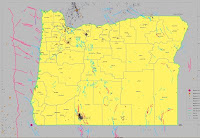
Movement on the Cascadia has been virtually non-existent for more than a century. This map shows seismological history of Oregon for the time period from 1841 through 2002. Note the red line running north/south off the Pacific coast. This represents the Cascadia fault. Note the earthquakes occur near, but not on the fault itself.

Now look at this USGS map showing the Cascadia fault registering a 4.3 magnitude earthquake on January 17, 2011. This is a highly unusual place for movement to occur. The map also shows several small quakes in the days before the larger one.

Foreshocks, Aftershocks or Anomaly?

Large Earthquakes are often preceded by 'foreshocks' which can occur from minutes to even years before the main shock. They occur in about forty percent of moderate to large quakes and perhaps seventy percent of quakes greater than magnitude 7.0.

Studies show foreshocks may increase in intensity over time leading to the main quake:
    "The observation of foreshocks associated with many earthquakes suggests that they are part of a preparation process prior to nucleation. In one model of earthquake rupture, the process forms as a cascade, starting with a very small event that triggers a larger one, continuing until the main shock rupture is triggered. "
Cascadia quake
4.3 Cascadia quake 01/17/2012
Unfortunately it is not possible to know if a particular quake is part of a foreshock pattern until after a main event occurs.

Aftershocks are smaller quakes which occur as plates readjust following a larger event. They decrease in frequency as time passes.

Perhaps the small quakes in the preceding days were foreshocks to a main 4.3 quake on the 17th? This is certainly possible, however if the 4.3 was the culmination of this series, it should have been followed by decreasing aftershocks as the huge plates settled back into a locked position. There have been no such aftershocks.

Earthquake prediction is notoriously unreliable. Tantalizing hints of patterns give hope that someday we may be able to recognize the precursors to great quakes and evacuate populations before they strike.

The question arises: Is Cascadia stirring? The recent anomalous quake on the fault is noteworthy if only for its rarity.

There are great concerns that this area is not prepared for a quake of historical size. Cities from Eureka, California to Vancouver, Washington are potential targets.

Tsunami Evacuation Route, Oregon
According to Peter Yanev, an engineer and earthquake building consultant in this article:
    "... ...Pacific Northwest cities are full of buildings with slender structural frames and fewer and smaller shear walls. In a mega-quake, many of the region's iconic tall buildings would probably collapse. "
The Cascadia Region Earthquake Workgroup has prepared a hypothetical scenario of the effects of a rupture of Cascadia. Predictions include:
"...• Depending on location, strong shaking might be felt for several minutes.
• Injuries and fatalities could number in the thousands, and
hundreds of buildings could be destroyed.
• A destructive tsunami will quickly hit the Cascadia coast
and travel across the Pacific Ocean.
• Aftershocks up to M7 are common, creating the potential
for additional damage."
Without a doubt, the Cascadia Subduction Zone will someday unleash a great quake in the Pacific Northwest. The odds may be as high as 45% that it will strike during the lifetime of todays residents. Whether the quake that occurred on January 17 was a foreshock, aftershock or simply an anomaly, Cascadia will rupture someday. Perhaps it will happen tomorrow or a decade from now. Please prepare now. The clock is ticking.

Plan Ahead:
Disaster Preparedness Kits from Amazon
DIY Disaster Preparedness Kits


images: Oregon quake history: http://www.oregongeology.com/sub/earthquakes/eqepicentermap.htm
Cascadia Subduction Zone: http://en.wikipedia.org/wiki/Cascadia_subduction_zone
tsunami evac: http://www.flickr.com/photos/cornelii/2066817391/sizes/m/in/photostream/
Cascadia_subduction_zone: http://en.wikipedia.org/wiki/Cascadia_subduction_zone

Wednesday, December 21, 2011

Skype Delivers Free Holiday Wifi to Fifty US Airports

The folks over at Skype are providing a welcome gift to weary travelers this holiday season. Unwrap an hour of free wifi access in more than fifty airports across the US. 
According to this announcement:
"From December 21st thru December 27th, travelers passing through or delayed in over 50 airports across the country will be able to access third-party hotspots using Skype WiFi and connect with loved ones via a Skype video or voice call for free."
To take advantage of this offer, you need to have the most recent version of the Skype client installed on your PC or Mac. After you sign into your Skype account, just check your wireless connection to verify you are in a supported location.

Grab your copy of Skype for Windows here, for Mac here and for Linux here.
Skype will brighten the holidays for travelers in major airports in New York, Chicago, Miami, Denver, Burbank and San Francisico, among many others.
Skype Wifi customers can also take advantage of this special holiday gift. Skype Wifi is a service which offers paid access to over a million wifi hotspots worldwide. 
After your trip, you can share your free holiday wifi experience at #freeskypewifi on Twitter


Article first published as Skype Delivers Free Holiday Wifi to 50 US Airports on Technorati.

Friday, November 18, 2011

Mars Science Lab 'Curiosity' Will Search for Signs of Life

'Curiosity' Rover will Search for Signs of Life
NASA is preparing to launch another rover mission to Mars on November 25, 2011. The goal of this mission will be to search for signs of past life on the Red Planet.

According to NASA's website,
"...Curiosity has 10 science instruments to search for evidence about whether Mars had environments favorable for microbial life, including the chemical ingredients for life."
Dubbed 'Curiosity', this seven foot tall rover is twice as big as previous mars' rovers and weighs over a ton. It carries more than ten times the mass of scientific equipment than the Spirit and Opportunity rovers launched in 2004.

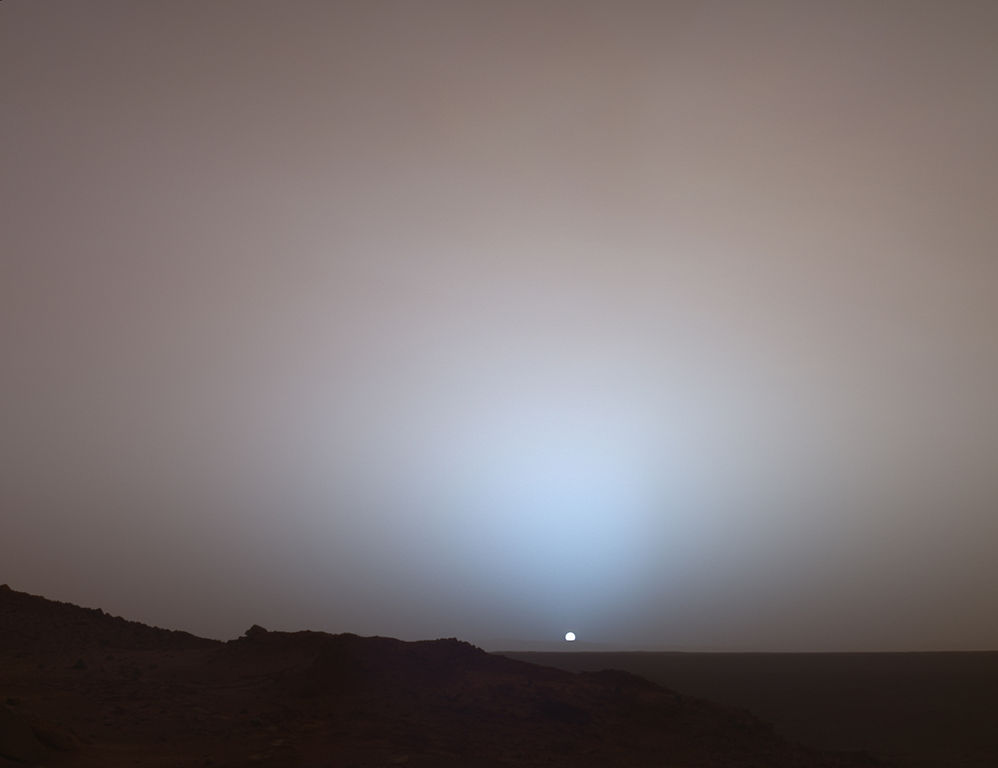
Spectacular Mars sunset
Propelled by an Atlas V rocket, the ambitious mission will last two years and focus on the Gale crater. Also known as the Mars Science Laboratory, this rover will carry more scientific equipment than has ever been sent to another planet.

Curiosity will attempt a first ever, multi-stage precision landing. It will use a combination of a supersonic parachute deployed at approximately 10 km (6.2 miles) to slow decent of the spacecraft, eight directional rocket thrusters which will allow controllers to adapt to the environment and steer the craft towards the landing area. Finally, a 'sky crane' will gently lower the rover to the planet surface.

Mars Gale Crater
Gale crater is believed to be about three and a half billion years old and 154 km (more than 95 miles) in diameter. This location was chosen for the rich combination of morphologic and mineralogical evidence of water in Mars' past. It contains minerals that are conducive to fossil preservation and the crater provides a surface that Curiosity can navigate safely. The choice was designed to "...identify a particular geologic environment, or set of environments, that would support microbial life."

This mission comes on the heels of an attempt by Russian scientists to land a probe on one of Mars' moons, Phobos, and return samples to Earth. The spacecraft is currently trapped in low Earth orbit and scientists are struggling to restart booster engines before it falls back to Earth containing tons of unspent rocket fuel.

Watch the launch live plus other special events, documentaries, news conferences and much more at NASA TV.

images: NASA / JPL-Caltech
rover: http://www.nasa.gov/mission_pages/msl/index.html
gale crater: http://en.wikipedia.org/wiki/File:Gale_crater.jpg
Martian sunset: http://upload.wikimedia.org/wikipedia/commons/thumb/6/69/MarsSunset.jpg/998px-MarsSunset.jpg


First published as Mars Science Lab 'Curiosity' Will Search for Signs of Life


Google Defies RIAA Over Download App

Google defies RIAA
A battle of behemoths is brewing as Google goes toe to toe with the RIAA (Recording Industry Association of America) over the availability of the app "MP3 Music Download Pro" in the Android Market which could be used to download copyrighted music.

Google contends that the app can also be used to download legal files and has so far refused to remove it from the Android Market.

The RIAA sent a takedown notice to Google in August over the app, which the RIAA said, "...is clearly being used for illegal purposes, and Google responded that they were declining to remove it from the Android Market."

Downloader App Screenshot
Google has removed apps from the market in the past that could be used for obtaining copyrighted music but an RIAA spokesperson complained that often the same or similar apps re-appear a few days later and, "...too many apps created to harvest links to unauthorized files remain available and popular on the Android marketplace, resulting in widespread infringement of copyrighted works."

In May, 2011, Google's Chairman Eric Schmidt called a proposed law, the  'Protect IP Act', "A disastrous precedent for Free Speech". This legislation, designed to combat offshore servers and endorsed by the RIAA, requires Search Engines and DNS servers to remove links and make targeted websites 'disappear' from the Internet.

Rumors persist that Google is working on agreements with the major record labels and plans to offer music purchases through the Google Music Store, similar to the successful Apple iTunes Music Store.
Downloader Pro Barcode

Google is building anticipation for a November 16, 2011 event "These Go To Eleven", an homage to the old 'This Is Spinal Tap' flick. There is speculation the announcement will include music purchases through the new music store and sharing services through Google+.

The RIAA has declined to say if they plan on filing suit against Google for facilitating copyright infringement. If they choose to take Google to court, the RIAA may find Google to be a tougher opponent than the thousands of private citizens the RIAA has been suing for several years.

First published as Google Defies RIAA Over Download App